Lost City Trek Colombia Health Guide: Vaccines and Malaria Risk
I remember standing on a wobbly plastic crate in a Santa Marta pharmacy at nine at night, sweat pasting my shirt to my ribs, trying to pantomime diarrhea and mosquito bites to a pharmacist who clearly had somewhere else to be. You do a lot of late-night Googling before heading into the Sierra Nevada mountains. The fear of getting stranded in a hammock three days deep into the jungle with a violent fever is real, and sorting through the medical warnings online usually leaves you more confused than prepared. If you are stressing over lost city trek colombia malaria concerns or wondering whether an official will turn you away for a missing shot, take a breath. It happens to almost everyone before this trip.
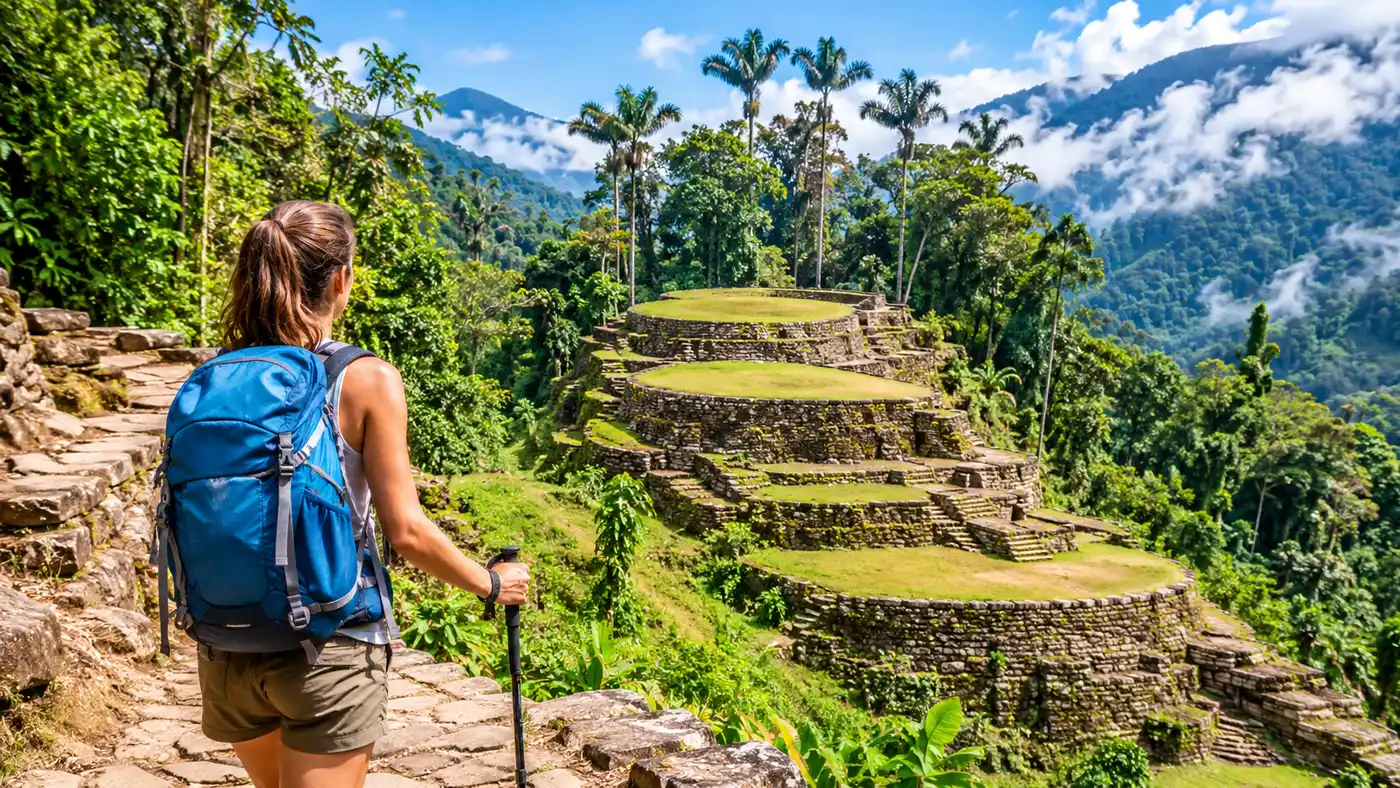
The trek to Teyuna is a physical grind. You walk through dense subtropical rainforest, wade waist-deep across muddy rivers, and sleep in open-sided bunkhouses where the jungle presses right up against the mosquito nets. Staying healthy out there does not require turning yourself into a walking biohazard lab, but it does mean making smart choices before you leave town. Here is what you actually face on the trail regarding insects, mandatory jabs, dodgy water, and trail hygiene.
Book your lost city trek colombia experience:
The Reality of Lost City Trek Colombia Malaria and Bug Bites
Let us tackle the big question right away. Malaria does exist in Colombia, but the country is vast, and the Sierra Nevada de Santa Marta has a very different profile than the deep Amazon basin or the swampy Pacific coast of Chocó. Most health organizations classify the foothills of the Sierra Nevada as a low-to-moderate transmission zone. The primary parasite found in Colombia is Plasmodium vivax, which is generally less deadly than the falciparum strain found across sub-Saharan Africa, though it will still make you thoroughly miserable.
Do you need prescription antimalarials? Doctors in Europe and North America will almost always look at a map, see green jungle, and prescribe you a blister pack of Malarone or Doxycycline. Some hikers take them without any problems. Others suffer from awful stomach cramps, nausea, or intense sun sensitivity - which is absolute hell when you are walking uphill in 32-degree heat under a beating tropical sun. Many experienced trekkers choose to skip the pills and rely entirely on strict bite prevention, while others prefer the peace of mind that medication brings. I think talking to a travel clinic doctor about Malarone makes sense, but honestly, your primary defense will always be keeping the bugs off your skin.
Note: If you choose Doxycycline, remember it makes your skin burn twice as fast. Walking through unshaded river valleys under direct equatorial sun while on Doxy requires ridiculous amounts of sunscreen and a wide-brim hat.
The mosquitoes are not even the biggest villains out there. The real tormentors on this trail are tiny biting midges known locally as puri-puri, or no-see-ums. They show up around five in the afternoon when the air cools down slightly, and their bites itch far worse than standard mosquito welts. If you scratch them with dirty fingernails on day two, you will have infected, oozing sores by day four. Dengue fever is also present in the Magdalena department, and because dengue-carrying Aedes mosquitoes bite during broad daylight, nighttime mosquito nets do nothing to protect against them.
Vaccines: Yellow Fever, Routine Shots, and Real Requirements
The debate around the lost city trek colombia yellow vaccine causes endless panicky forum posts. Colombia used to strictly enforce the yellow card for anyone entering national parks or rural forest reserves. Nowadays, enforcement is erratic. When you land at the airport in Bogota or Cartagena, border control rarely asks to see your card unless you are arriving from an endemic nation like Brazil or Angola. At the trailhead in Machete Pelao, the tour operators rarely ask to see paperwork, though park authorities reserve the right to check spot certificates whenever cases flare up in the lowlands.
You should just get the shot anyway. The lost city trek colombia yellow fever risk might be statistically low at the elevations you pass through, but yellow fever is lethal, and the vaccine confers lifetime immunity after a single dose. You need to get it at least 10 days before reaching Colombia for the certificate to be legally valid and for the antibodies to form in your bloodstream. If you cannot get it at home because of high costs, you can actually get vaccinated for free at Bogota's El Dorado airport, though that adds unnecessary stress before a trek.
| Condition | Risk on Trek | Primary Prevention | Medical Approach |
|---|---|---|---|
| Malaria | Low to Moderate | DEET/Picaridin, long layers | Optional pills (Atovaquone-Proguanil) |
| Yellow Fever | Very Low | Single-dose vaccine | Mandatory proof occasionally checked |
| Dengue Fever | Moderate | Daytime bug repellent | No vaccine; symptom management only |
| Hepatitis A | Moderate | Food hygiene, clean water | Routine travel vaccination recommended |
| Tetanus | Moderate | Footwear, clean wounds fast | Booster within past 10 years |
Beyond yellow fever, get your Hepatitis A and Tetanus boosters updated. You will be walking through mud full of mule manure, clutching rusty wire railings near riverbeds, and eating food prepared in rustic jungle kitchens. A small puncture wound from a bamboo splinter or a slip on a rocky creek bed can turn dangerous if your tetanus shot lapsed eight years ago. Typhoid is worth considering too, especially if you plan to eat street food along the coast before or after your hike.
Water, Food, and Surviving Jungle Gut
Nothing ruins a four-day hike faster than a sudden gastrointestinal revolt while you are midway up an 800-meter vertical ridge. The food provided by the tour agencies is surprisingly great. Cooks at the camps chop fresh vegetables, fry plantains, grill chicken, and serve heaps of rice. Because these camps cater to dozens of foreigners every single week, the kitchen crews are cautious with cross-contamination and washing produce. Most travelers who get sick do not get sick from the cooked dinners. They get sick from contaminated river water, unwashed hands, or eating unpeeled fruit bought from random stalls along the dirt road.
Every camp has large water jugs filled with filtered or treated water. The guides will tell you it is safe to drink, and for 90% of hikers, it is. But if you have an irritable stomach, bring chlorine dioxide droplets or a personal filter bottle to double-treat whatever you take from the camp taps. Do not ever drink directly from the Rio Buritaca, no matter how crystal clear it looks running over the stones. Upstream, there are indigenous villages, livestock, and other hikers using the forest as an emergency toilet.
Pro tip: Keep a tiny bottle of liquid alcohol hand sanitizer in the outside mesh pocket of your daypack, not buried inside, and use it every single time before you touch snack fruit on trail breaks.
Electrolytes are your lifeline. You will sweat out several liters of water each day, and chugging straight filtered water without replacing minerals just dilutes your system, leading to splitting headaches, muscle twitches, and nausea. Buy four or five packets of rehydration salts in Santa Marta before jumping in the 4x4. Dissolve one packet in your bottle around mid-day when the humidity reaches its peak.
Book your lost city trek colombia experience:
Building Your Jungle Medical Kit
Your guide carries a rudimentary first-aid kit, but it usually contains little more than some adhesive bandages, cotton balls, rubbing alcohol, and maybe a pack of local ibuprofen. You cannot rely on an indigenous guide to fix a deep friction blister or stop chronic traveler diarrhea. Keep your personal medical bag light, waterproof, and easily accessible. A heavy zipper pouch inside a dry sack will keep everything from turning into a soggy mush during heavy afternoon downpours.
- Blister protection: moleskin, leukotape, and sterile lancets for draining hot spots before they burst.
- Stomach medication: loperamide for emergency stops, pepto-bismol tablets, and an oral rehydration packet.
- Topical anti-itch: 1% hydrocortisone cream to stop yourself from ripping your skin open on puri-puri bites.
- Broad-spectrum antibiotic: Azithromycin or Ciprofloxacin, obtained from your doctor beforehand for severe bacterial food poisoning.
- Wound disinfectant: small tube of povidone-iodine or triple antibiotic ointment for scrapes that refuse to heal in humidity.
- Electrolyte powders: three or four single-serve packs with sodium, potassium, and magnesium.
Do not pack full boxes of pills. Strip the blister sheets out of the cardboard packaging, tape a note with the dosage instructions directly to the plastic foil, and throw them together into a ziplock. Space in your daypack is precious when you are hauling your own gear across multiple ridges, an aspect covered in detail within our Lost City Trek Colombia difficulty and packing guide. A 200-gram medical kit is plenty for four days.
Daily Jungle Hygiene and Foot Care
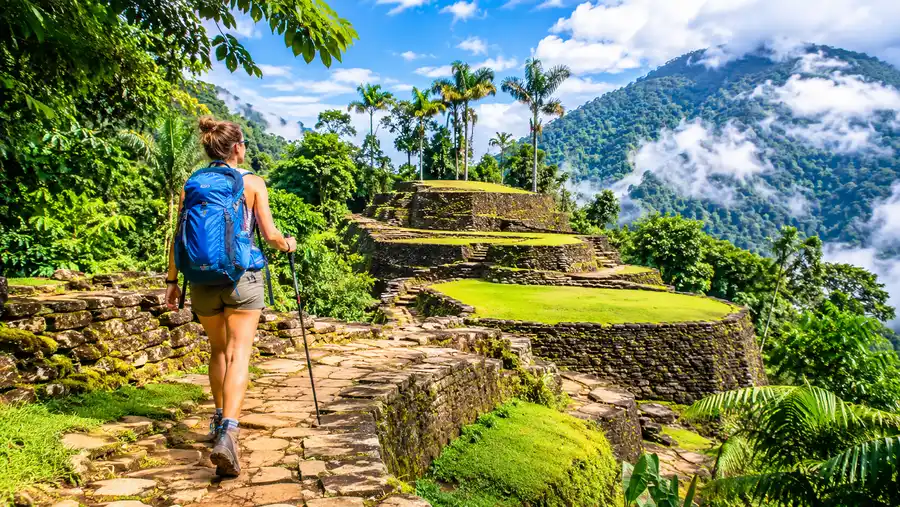
The tropical humidity never drops below 80% out here. Once your clothes get wet from sweat or river crossings, they stay wet for the remainder of the trip. Hanging socks on the lines at camp overnight is an exercise in futility; the heavy dew ensures they are just as damp at 5:00 AM as they were when you took them off. This constant moisture is a playground for fungal infections and skin breakdown.
- Wash feet immediately at camp: strip off wet boots, rinse mud from between your toes, and dry them thoroughly with a dedicated micro towel.
- Keep camp clothes sacred: guard one dry set of shorts and a cotton shirt inside a dry sack, and never wear them while walking or in the rain.
- Air out hot spots: apply antifungal talc or baby powder to your feet and groin before crawling into your bunk.
- Check for ticks: examine your legs, waistline, and behind your knees after brushing through tall pasture grass on the low sections.
Friction burns are just as likely to take you out as an infectious bug. Chafing happens fast when wet shorts rub against skin covered in grit and dried sweat. Bringing a small tube of anti-chafe balm or simple petroleum jelly will save your inner thighs on the endless stair climbs. If you notice a red patch forming on morning two, grease it up immediately before it turns into raw meat by noon.
Frequently Asked Questions about lost city trek colombia malaria
Is lost city trek colombia malaria medication strictly necessary?
No, it is not legally mandated, nor is it strictly necessary for every traveler. The risk in the Sierra Nevada is relatively low compared to other tropical areas. Many travelers decide against taking preventative pills due to side effects, choosing instead to rely on heavy-duty insect repellent, permethrin-treated clothing, and bed netting. However, if you are immunocompromised or want zero anxiety, Malarone is the best tolerated prophylactic option.
Are mosquito nets provided at the camps?
Yes. Every single established bunkhouse and hammock station on the route has mosquito netting fitted over the beds. Before you crawl into bed, tuck the edges firmly under the mattress and check the mesh for any tears or gaps where insects could slip inside during the night.
Can I buy repellent and medicines on the trail?
Basic sundries can be purchased at small kiosks run by local families along the trail, but the selection is tiny. You might find cheap aerosol bug spray, bottled sodas, and pain relievers, but you will not find specific anti-itch creams, quality blister tape, or prescription antidiarrheals. Buy all medical supplies in Santa Marta.
Is there a high lost city trek colombia yellow fever risk right now?
The risk remains very low in the hiking corridors, as yellow fever vectors primarily circulate among wild primates in remote canopy forests. However, Colombia still experiences periodic regional advisories, and having the yellow card avoids any headaches if health inspectors check vehicles leaving Santa Marta.
Quick Reference
- Malaria risk: Low, but bug protection is mandatory
- Yellow fever shot: Recommended, take it 10+ days prior
- Mosquito nets: Provided at all tour bunkhouses
- Trail water: Always filter or treat before drinking
Book your lost city trek colombia experience:
The Bottom Line
Preparing for the jungle is mostly about respecting the environment rather than panicking over rare tropical bugs. You will almost certainly encounter swarms of no-see-ums, dripping humidity, and muddy trails that make your knees ache. Buy a reliable bottle of picaridin repellent, update your routine shots, take your time crossing the rivers, and keep your camp clothes bone dry. If you manage your personal hygiene and drink enough electrolytes, you can forget about the health paranoia and focus entirely on the ancient stone paths hidden up in the clouds.
Read more about lost city trek colombia.