Lost City Trek Colombia Difficulty, Distance, Elevation & Packing
Nobody warns you about the dampness. By 2:00 PM on the second afternoon, every single item in your pack smells like river silt, your socks weigh twice what they should, and the trail ahead kicks up at an angle that feels personally insulting. Assessing the true lost city colombia trek difficulty comes down to enduring wet heat rather than navigating technical mountaineering. You are marching through the jungle canopy of the Sierra Nevada de Santa Marta, where sweat refuses to evaporate from your skin.
The journey to Teyuna is demanding, messy, and thoroughly exhausting. If you can walk seven miles across rough ground while soaked in river water, you can reach the ruins. The trail breaks people who underestimate the climate or carry twelve kilograms of camera gear they never touch. Let us walk through the exact mileage, the daily climbs, the elevation profile, and the gear choices that separate a miserable slog from a wild backcountry achievement.
Book your lost city trek colombia experience:
The Real Lost City Colombia Trek Difficulty: Heat, Humidity, and Mud
The trail is not technical. You do not need ropes, crampons, or mountaineering experience. What makes it tough is the constant combination of 30°C heat and 85% humidity. You start sweating five minutes after leaving the breakfast table, and you stay wet until you fall asleep under your mosquito net. In rainy months, the red clay turns into slick grease. For every step up, your boot slides back half an inch. That constant micro-slipping destroys your calves and burns out your stabilizer muscles faster than dry mountain hiking ever could.
River crossings happen daily. Depending on rainfall, the Buritaca River might reach your shins or surge past your waist. The current pulls hard against your knees, and the riverbed rocks are coated in slimy algae. Indigenous children from the Kogui and Wiwa communities skip across barefoot carrying twenty-pound bundles of plantains, which is mildly humbling when you are clinging to a guide rope for dear life.
Note: Flash storms can turn a clear, knee-deep river into an impassable brown torrent in forty minutes. Always follow your indigenous guide's timing on crossings without arguing.
Camp life offers simple relief. You sleep in wooden bunk shelters or hammocks covered with fine netting, usually lined up twenty beds deep under corrugated tin roofs. Generator power cuts out around 9:00 PM. The showers run freezing cold mountain runoff, which feels heavenly at first and bone-chilling after four minutes. You do not hike this trail for hotel luxury. You do it to unplug completely.
Lost City Trek Colombia Distance and Daily Trail Breakdown
Hikers frequently ask how long is the lost city trek colombia from start to finish. The total lost city trek colombia distance is roughly 47 kilometers, which works out to about 29 miles on an out-and-back trail. Because you walk into the river valley and then retrace your steps back to the trailhead town of El Mamey, you climb the same hills in reverse on the way out.
When deciding on the colombia lost city trek how many days to book, the classic four-day schedule is the standard choice for 85% of hikers. A five-day option covers the exact same path, but it splits the punishing final day into two shorter strolls. If you have joint pain or want long afternoons bathing in natural swimming holes, book five days. If you prefer to push your pace and get back to a beach hostel in Palomino sooner, four days is plenty.
| Day | Distance | Elevation Gain / Loss | Hiking Time | Overnight Camp |
|---|---|---|---|---|
| Day 1 | 7.6 km (4.7 mi) | +410 m / -280 m | 3.5 - 4 hours | Camp 1 (Adán or Alfredo) |
| Day 2 | 14.8 km (9.2 mi) | +620 m / -450 m | 6 - 7 hours | Camp 3 (Paraíso Teyuna) |
| Day 3 | 12.5 km (7.8 mi) | +450 m / -580 m | 6 - 7 hours | Camp 2 (Mumake) |
| Day 4 | 12.1 km (7.5 mi) | +290 m / -460 m | 5 - 6 hours | El Mamey (End) |
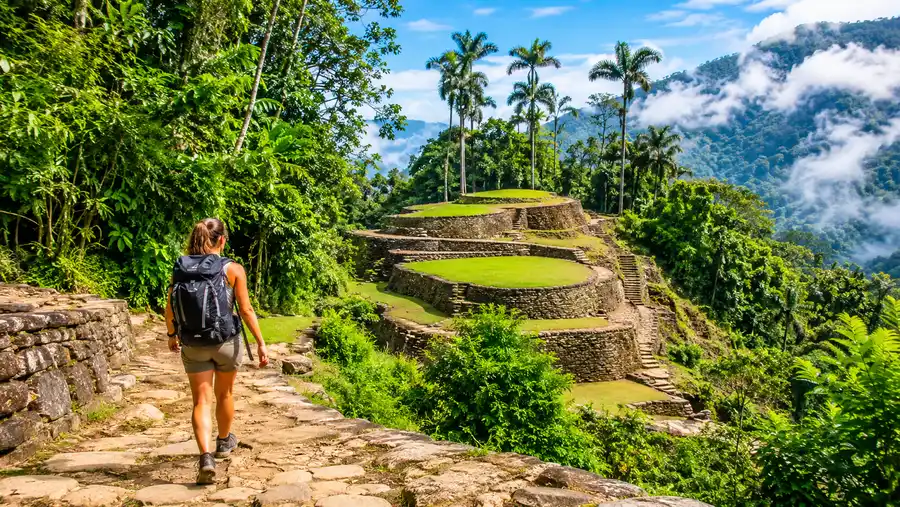
Studying a lost city trek colombia map reveals how the route snakes alongside the Buritaca River. The trail rolls relentlessly. You rarely walk on flat dirt for more than two hundred yards before starting another steep staircase or descending a slick mud chute.
- The El Mamey Climb: the very first ascent hits you immediately after lunch on Day 1, climbing 400 vertical meters through exposed cow pasture with zero shade.
- The Mumake Pass: Day 2 sends you over a steep mountain ridge before dropping straight down to an indigenous village where children sell sweet local oranges.
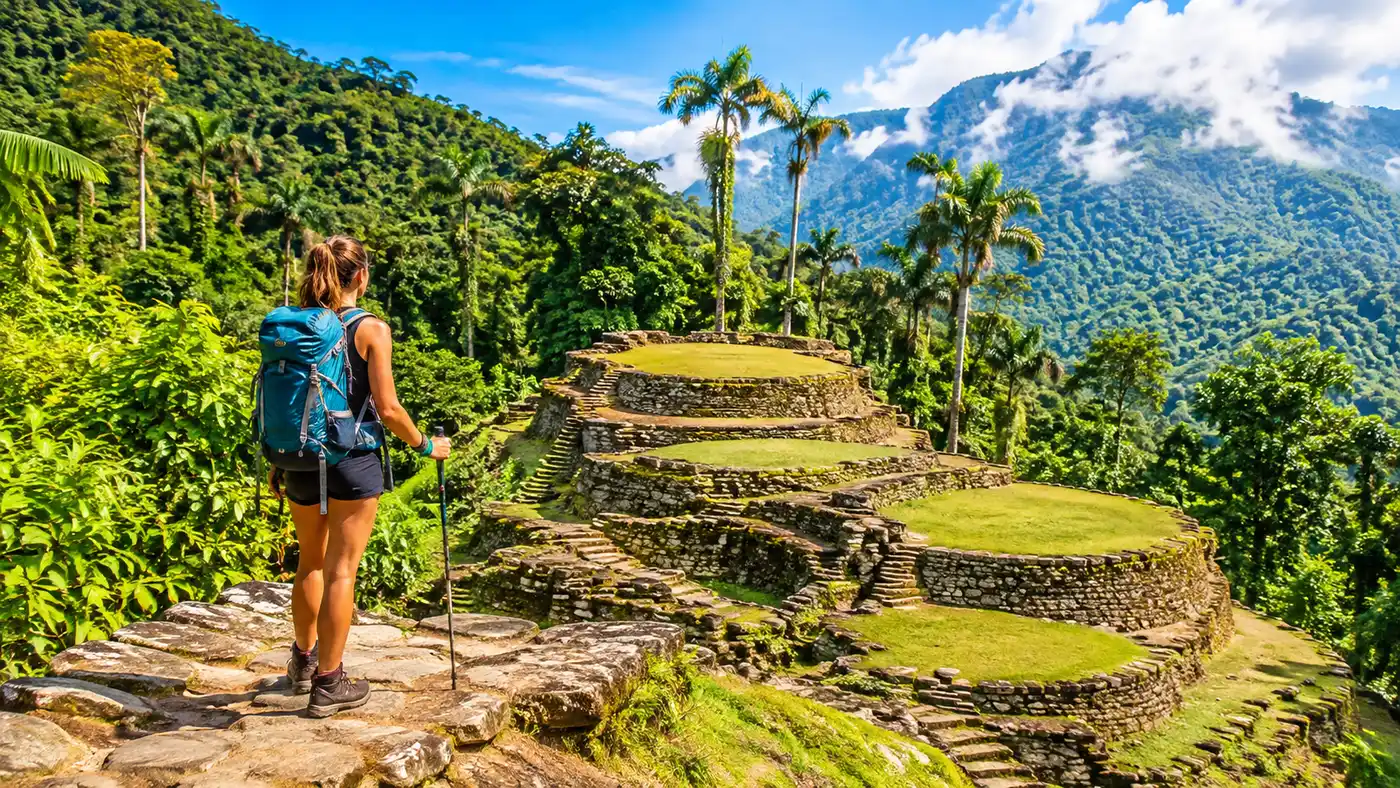
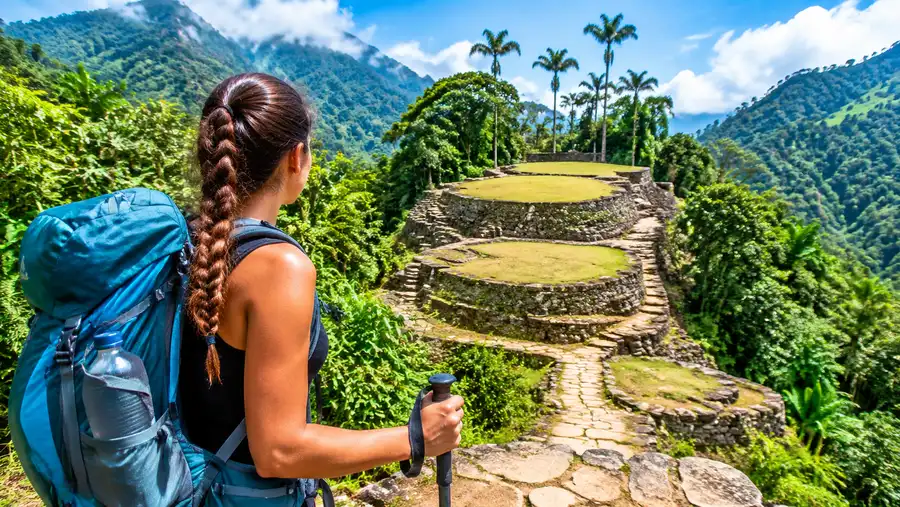
- The 1,200 Stone Steps: the final assault on Day 3 morning, consisting of narrow, mossy stones built by the Tayrona people over a thousand years ago.
- The Return Burn: walking the trail backwards on Day 4 means climbing hills you barely noticed descending two mornings earlier.
Trail conditions swing wildly depending on the month. If you are debating the calendar, reading through this guide on the best time to do the Lost City trek helps clarify the difference between dry dust trails in January and thigh-deep mud pits in October.
Lost City Trek Colombia Elevation and Altitude Reality Check
A widespread misconception is that this trek causes altitude sickness. It does not. The lost city trek colombia altitude peaks at just 1,200 meters (3,937 feet) above sea level at the central terraces of Ciudad Perdida. For comparison, Bogota sits at 2,640 meters and Cusco sits at 3,400 meters. You will not gasp for thin oxygen, and you will not need acetazolamide pills.
The physical toll comes from the total lost city trek colombia elevation gain, not the peak height. Over four days, your legs accumulate roughly 2,200 meters (over 7,200 feet) of climbing and identical descent. That equals climbing the Empire State Building five times on unpaved earthen ramps. Your quads absorb severe punishment on the downhill runs, especially when you are bracing against slick mud while carrying a daypack.
Pro tip: Bring a pair of lightweight trekking poles with rubber tips. They save your knees on the slick descent from the ruins and prevent embarrassing wipeouts in the mud.
Reaching the actual stone steps requires wading the Buritaca River at dawn on the third day. The water is ice-cold. You lace up your wet shoes on the far bank and stare up at the moss-draped stone staircase carved directly into the mountain face. The steps are uneven, narrow, and damp. Reaching the upper terrace feels surreal. Mist rolls across the circular stone foundations, palms sway over the clearing, and the sheer scale of ancient Tayrona engineering makes every foot blister disappear from your mind.
Book your lost city trek colombia experience:
Lost City Trek Colombia Packing List: What to Bring and What to Leave
Overpacking is the most frequent blunder travelers commit. You must carry your own gear from camp to camp. While pack mules can be hired for luggage, they chew up trails and cost extra. A compact 25-liter to 32-liter backpack is ideal. If your pack weighs more than six kilograms (thirteen pounds) when you step into the 4x4 at Santa Marta, pull things out.
Nothing dries out overnight in the jungle canopy. Putting damp hiking clothes back on at 5:30 AM is part of the initiation ritual. Keep one sacred set of clothes sealed in a dry bag purely for sleeping, and resign yourself to wearing the same wet trail outfit during the day.
- Quick-drying trail shirts: pack three lightweight synthetic tees; cotton holds water like a sponge and will never dry.
- Hiking shorts and tights: running shorts work well during the day, but lightweight full-length tights save your legs from biting sandflies in the evenings.
- Quality trail runners: leave heavy leather hiking boots at home; trail runners drain river water instantly and dry twice as fast.
- Camp footwear: pack lightweight flip-flops or foam sandals so your feet can air out the moment you reach camp.
- Water purification tablets: while camps provide boiled water, keeping chlorine dioxide tabs in your pocket saves time at river crossings.
- High-strength insect repellent: jungle no-see-ums ignore weak organic sprays; you need picaridin or 30% DEET applied around your ankles every dawn.
- Dry bags or heavy trash bags: line the entire interior of your pack with a waterproof sack to survive afternoon cloudbursts.
Before leaving Santa Marta, review your medical kit. Preparing for mosquito risks and local bugs is straightforward, and this breakdown on Lost City trek vaccines and malaria risks explains what clinic stops you actually need to make beforehand.
Training and Preparation: Can an Average Hiker Finish?
You do not need to be an ultra-marathoner. I have shared trail dinners with sixty-year-old retired teachers and eighteen-year-old gap-year students who managed fine. The trek requires mental grit and basic cardiovascular endurance. If you can walk for five hours on a hilly nature trail on a Saturday, recover overnight, and do it again on Sunday, you have sufficient fitness.
The best training preparation involves stair work. Find a parking garage, stadium bleachers, or an apartment building with ten flights of stairs. Put eight pounds of books into your daypack and spend forty-five minutes hiking up and down twice a week. That specific eccentric strain prepares your knees for the thousand ancient steps waiting at the top of the Buritaca gorge.
Hydration demands respect. You lose an astonishing amount of water through your skin. Drinking straight river water will knock your stomach out for weeks, so drink only the filtered or boiled water provided at meals. Electrolyte powder packets are worth their weight in gold. Dropping one tablet into your bottle around 11:00 AM prevents heat cramps and wards off that dizzy, depleted sensation that hits halfway up the afternoon ridgeline.
Frequently Asked Questions about lost city colombia trek difficulty
Is the Lost City trek harder than the Inca Trail?
The Inca Trail has much higher altitude that causes nausea and headaches, but the Lost City trek is far harder on the body in terms of heat, humidity, steep mud slopes, and basic campsite conditions.
Can you do the Ciudad Perdida trek independently without a guide?
No. By Colombian law and agreements with indigenous communities, you can only enter the Sierra Nevada de Santa Marta on an authorized tour accompanied by an official guide and an indigenous translator.
Are there electrical outlets in the camps to charge phones?
Most camps run generators for three hours in the evening with a charging strip near the kitchen. Outlets are crowded and unreliable, so carrying a 10,000 mAh power bank is essential.
What happens if I get injured or too sick to walk?
Guides communicate across camps via radio. If you sprain an ankle or fall ill, mule transport can be organized to carry you out, though serious emergencies require a rescue helicopter evacuation from designated clearings.
Quick Reference
- Total distance: 47 kilometers (29 miles) round-trip
- Highest point: 1,200 meters (3,937 feet) above sea level
- Duration options: 4 days (intense) or 5 days (relaxed)
- River crossings: 2 to 4 crossings depending on season
- Daily hiking time: 4 to 7 hours per day
Book your lost city trek colombia experience:
The Bottom Line
The trail will test your tolerance for mud, wet socks, and steep climbs under a thick blanket of jungle air. It asks for physical effort, but it pays you back with turquoise river pools, ancient stone cities hidden in the clouds, and conversations around wooden tables with indigenous families whose traditions stretch back hundreds of years. Pack light, leave your expectations of luxury behind, take care of your feet, and enjoy every muddy mile of the journey.
Read more about lost city trek colombia.