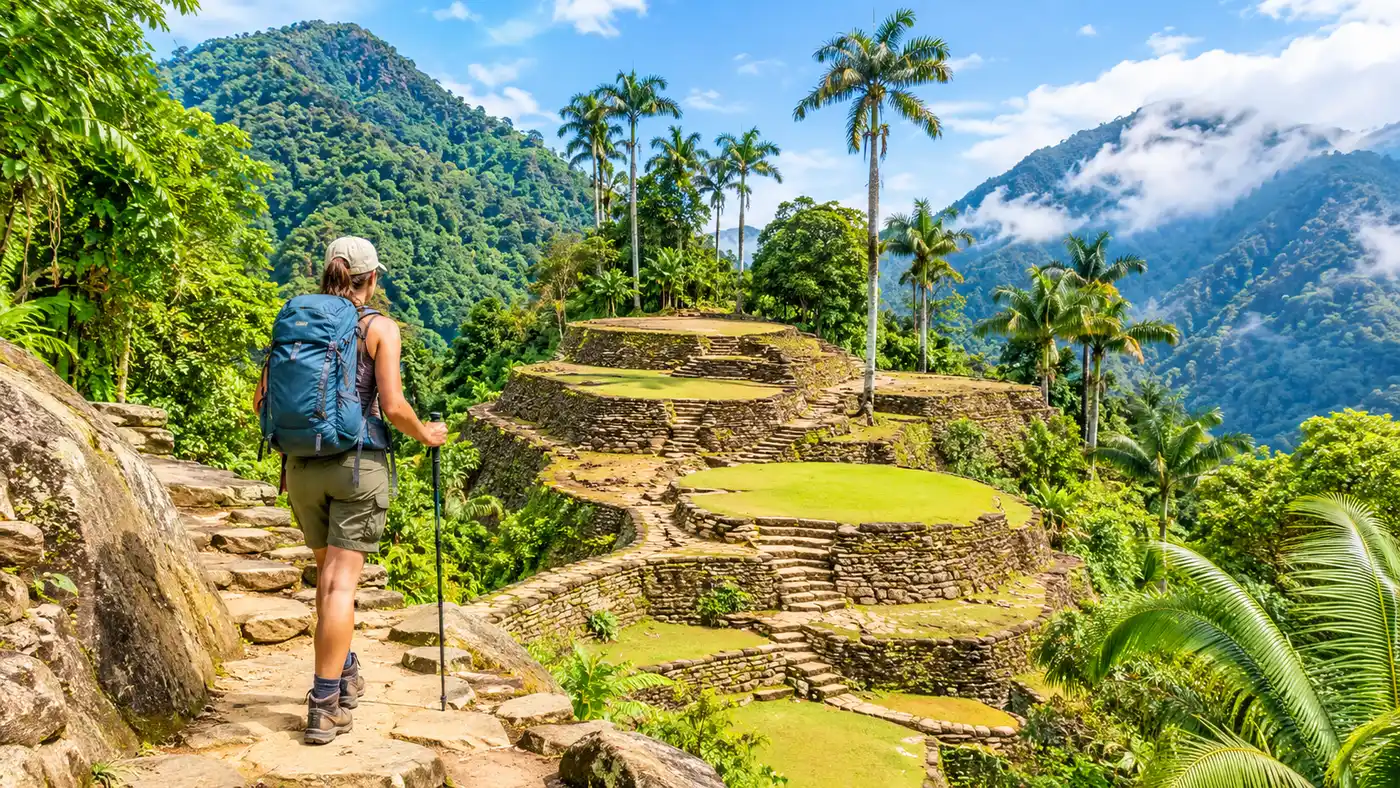
Best Time to Do the Lost City Trek Colombia: Weather & Seasons
You will sweat through your shirt within twenty minutes of leaving the trailhead at Machete Pelao. The Sierra Nevada de Santa Marta rises straight out of the Caribbean Sea, creating a wall of emerald peaks where dense cloud forests dump water into river valleys every single week of the year. Finding the best time to do lost city trek colombia is less about dodging moisture entirely and more about deciding what kind of suffering you prefer. You either deal with baking sun, dust, and busy trails, or you hike through knee-deep mud while afternoon thunder rattles the valley walls.
I walked the trail in late January and returned another year in July. Both trips felt like completely different expeditions. The 47-kilometer route to Teyuna cuts through ancestral lands belonging to the Kogi, Wiwa, Arhuaco, and Kankuamo peoples, where elevation shifts rapidly from 150 meters up to 1,200 meters. Before you hand over cash to an agency in Santa Marta, you need to understand how the seasons dictate trail conditions, river safety, and whether you will actually see the stone terraces through the fog.
Book your lost city trek colombia experience:
Understanding Lost City Colombia Trek Weather Across the Year
The weather in this pocket of northern Colombia refuses to follow standard mountain rules. The Sierra Nevada is the highest coastal range on the planet, so it traps warm, moist ocean air that cools as it hits the slopes. This creates an intense microclimate where temperatures hover around 29°C during the day in the lower valleys, dropping to roughly 17°C once you climb to the third camp near the ruins. Humidity sits near 85 percent year-round. Your clothes will not dry overnight. Hang your socks on a line at 6:00 PM and they will be just as damp at 5:00 AM when your guide wakes you up with hot tinto.
Rain here is rarely a gentle drizzle. When tropical depressions roll in, the skies open up with biblical force for two or three hours, turning placid knee-deep streams into roaring brown torrents. The dry season runs roughly from December through March. The wet season stretches from April through November, although it eases off slightly for a few weeks between late June and early August. That mid-year lull, locally called the veranillo de San Juan, can deliver blue morning skies followed by brief, manageable showers.
Pro tip: Bring cheap, lightweight sandals with heel straps for camp life and river crossings so your main hiking shoes have a fighting chance to air out each evening.
If you hike during months with high precipitation, the Buritaca River swells dramatically. Guides use ropes strung between banks to pull hikers across water that reaches your chest. It feels thrilling, sure, but it also adds hours to the walking time. You can read up on the physical demands in our guide to Lost City Trek Colombia difficulty and distance if you want a clear idea of what the elevation profile looks like when combined with bad footing.
Dry Season: Finding the Best Month to Do the Lost City Trek in Colombia
January is generally considered the best month to do the lost city trek in colombia if you hate walking through sludge. The trails are packed hard, the river crossings barely reach your knees, and the stone staircases leading into Teyuna are dry enough to climb without clinging to vines for balance. The sunlight filters through the canopy in clean, golden rays early in the day, giving you incredible views of the jungle ridge lines.
There is a catch. Everyone else wants those same conditions.
Camps fill up fast between Christmas and late February. You might find yourself sharing a dormitory shelter with 60 other tired hikers, listening to an orchestra of snores while waiting in line for a lukewarm shower. Dust replaces mud as your primary nuisance. Mules kick up fine silt that coats your skin and gets into your teeth. The heat in the exposed pastures along Day 1 can feel brutal, frequently pushing past 32°C before you dip under the forest cover.
- December: Rains begin tapering off, vegetation is vivid green, but river levels can still fluctuate unexpectedly.
- January: Clearest skies of the year, lowest rainfall numbers, maximum trail traffic and packed camps.
- February: Very dry, dust levels peak on lower pastures, smaller streams dry up completely.
- March: Heat builds up significantly before the spring rains arrive, making the steep ascents physically draining.
February is my favorite pick out of this block. It lacks the intense holiday chaos of early January, and while the heat is relentless, the river camps offer freezing pools where you can float away the afternoon burn. Expect to pay standard fixed tour rates regardless of the crowd size, as explained in our breakdown of Lost City Trek tours and costs.
Rainy Season Realities and Lost City Trek Colombia When to Go
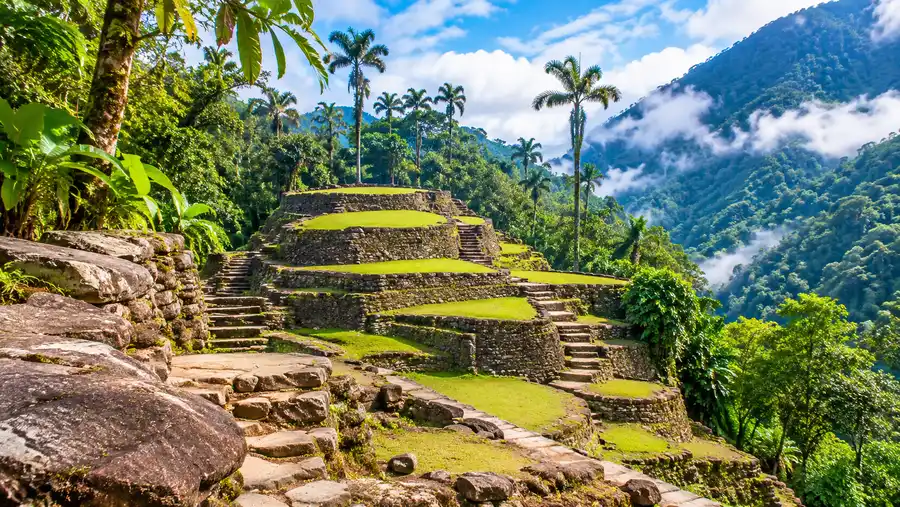
Choosing to hike between April and November means accepting the rain as part of the story. The mornings often start calm, with mist weaving between the palm trees and birds calling across the valley. By 1:30 PM, heavy clouds build against the mountains. When it breaks, the red clay trail transforms into a slide. You will slip. You will fall on your backside at least once, coating your shorts in orange muck that never washes out.
The trade-off is solitude and atmosphere. Instead of trekking in a conga line behind three other groups, you often have vast stretches of the path to yourself. The indigenous settlements feel quieter, more grounded. The waterfalls beside the camps roar with incredible power, and the forest feels alive in a way that dry January cannot match.
| Month | Rainfall Pattern | Trail Condition | Crowd Level |
|---|---|---|---|
| January | Lowest (under 40mm) | Dry, hard-packed, dusty | Peak |
| February | Minimal (under 30mm) | Very dry, slippery gravel | Moderate-High |
| March | Low (rises late month) | Dry with occasional showers | Moderate |
| April | Moderate (afternoon downpours) | Softening mud, river rising | Low-Moderate |
| May | High (frequent daily rain) | Heavy mud, swollen crossings | Low |
| June | Moderate (transitional) | Mixed mud and clear mornings | Moderate |
| July | Moderate (mini-dry window) | Manageable mud, humid | Moderate |
| August | Moderate to High | Deep mud sections, river ropes up | Moderate |
| September | Very High | Closed for indigenous ceremony | None (Zero) |
| October | Peak rainfall (over 300mm) | Extreme mud, high river danger | Very Low |
| November | Rains tapering off late | Gradually drying, slick rocks | Low-Moderate |
| December | Low to Moderate | Firming up, clear skies return | High (late month) |
If you are trying to decide when to go, weigh your tolerance for wet feet against your patience for crowded campsites. May and October bring the heaviest downpours. October in particular sees massive amounts of rain that can wash out sections of the lower trail, occasionally forcing guides to alter routes or wait out river surges on high banks for several hours.
Book your lost city trek colombia experience:
The September Shutdown: Why the Lost City Trek Colombia is Closed
Do not plan a trip for September. Every year without exception, the trail shuts down for the entire calendar month. If a travel agent tells you they can get you into the ruins during September, walk away immediately.
The closure happens for cultural and environmental reasons. The four indigenous tribes that inhabit the Sierra Nevada de Santa Marta request this quiet window to perform traditional cleaning rituals. They believe the constant influx of foreign energy, footsteps, and chatter disrupts the spiritual balance of the mountain. They gather at the sacred terraces to make offerings, chant, and restore harmony to the land without tourists snapping photos.
Note: The park authority and indigenous councils enforce this closure strictly, meaning all camps are vacated and no permits are issued from September 1 to September 30.
The environment benefits just as much. The trail absorbs thousands of footprints over eleven months of heavy commercial use. September gives the thin mountain soil a chance to recover from erosion. Camp staff use this month to rebuild wooden bunk platforms, replace ripped mosquito netting, service water filtration lines, and repair bridges battered by swollen rivers. The lost city trek colombia closed period is non-negotiable, so plan your Colombian itinerary around it.
Shoulder Months: Navigating May, June, July, and October
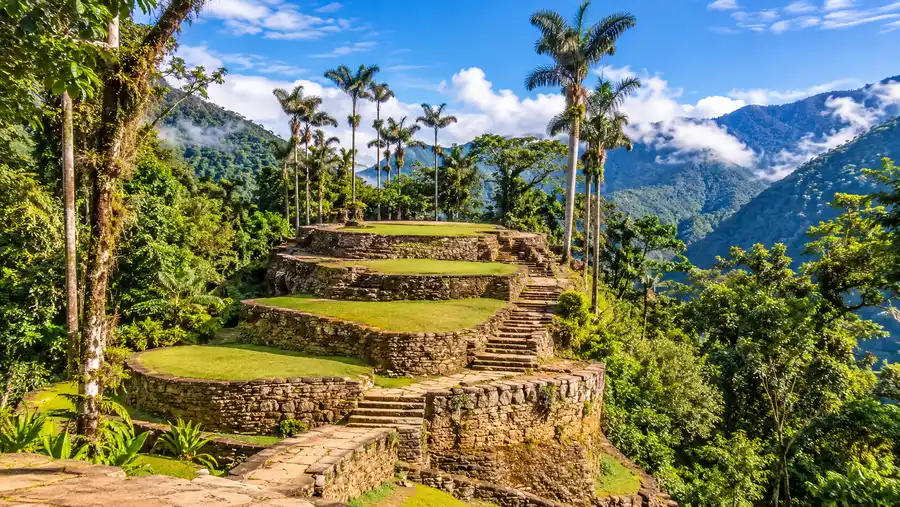
The shoulder months offer strange, rewarding compromises. June and July are particularly interesting for travelers who want to avoid the winter rush from Europe and North America. Thanks to the mini-dry window, you often get dry walking conditions from 6:00 AM until roughly 1:00 PM. That gives you plenty of time to crush the morning mileage, reach your afternoon camp, and secure a bottom bunk before the skies turn dark gray.
October is a different beast entirely. It represents the height of the wet season. Honestly, I would hesitate before sending a first-time trekker onto the trail in October unless they genuinely love rough conditions. The final push up the 1,200 mossy steps to the Lost City becomes an exercise in careful foot placement because water cascades down the stone like a mini waterfall. Yet, when you stand on the top terrace surrounded by thick clouds parting over the valley, you feel like you discovered the place alone.
- Waterproof everything: Heavy dry bags are non-negotiable; cheap pack covers blow off in jungle wind gusts.
- Trekking poles save knees: Mud pulls boots down with suction, and two poles give you essential balance points.
- Blister prevention: Moisture softens skin quickly, so tape hot spots with Leukotape before starting each morning.
- Quick-drying synthetic fabrics: Cotton is useless here; wear thin merino wool or technical nylon that rinses clean.
July remains my favorite alternative to the dry season. The jungle is vivid green, exotic fruits like maracuyá are ripe at trailside stalls, and the swimming holes at Camp 2 feel refreshing after a four-hour slog under the sun. You will get wet, certainly. But in thirty-degree heat, a cool afternoon downpour actually feels like a relief rather than an obstacle.
Frequently Asked Questions about best time to do lost city trek colombia
What is the single best month to hike to the Lost City?
January offers the most stable conditions with very little rain, manageable river crossings, and predictable sunshine, though February is slightly less crowded and equally dry.
Can you hike the Lost City in September?
No, the trail closes for the entire month of September every year so indigenous communities can perform spiritual cleansings and camps can undergo routine maintenance.
Does it rain all day during the wet season?
Rarely. Wet season weather usually follows a daily cycle of clear mornings followed by intense, heavy downpours starting in the early afternoon and lasting two to three hours.
Is the trek dangerous during heavy rains?
The primary hazards are swollen rivers and slick mud descents, but indigenous guides monitor water levels closely and set safety ropes across crossings to prevent accidents.
Quick Reference
- Dry season: December to March (easiest walking, high crowds)
- Rainy season: April to November (thick mud, swollen rivers, fewer hikers)
- Annual closure: September 1 to September 30 (strictly non-negotiable)
- Mid-year dry window: late June through July
- Average temperature: 28°C to 30°C in valleys, 17°C at night up high
Book your lost city trek colombia experience:
My Take
Do not obsess too much over avoiding every drop of rain. Some of my fondest memories from the Sierra Nevada involve sitting under a tin roof at Camp Adán with twenty wet hikers, sipping warm soup while a tropical storm hammered the tin above us. Pick your dates based on your tolerance for crowds versus your comfort with mud. If you want hard-packed ground and easy river steps, aim for January or February. If you want lush greenery, thundering waterfalls, and space to breathe without thirty people crowding your photos, book late July and pack a heavy-duty dry bag.
Read more about lost city trek colombia.